
A check-in that takes seconds
Pick how you feel, solve a short puzzle and enter your 2-digit PIN. Add a note as long as you like. Choose the time that suits you, and keep a streak if it helps.
Now live · Free to join
Adamfo is a daily check-in for people living with psychosis, bipolar disorder, schizophrenia and severe depression. A small puzzle, a short note, or a single tap that says I’m okay today.
When the check-ins stop, Adamfo doesn’t wait for the person to ask for help. It quietly tells the friends they chose, while they were well, that it’s time to check in on them.
Free to join · works in your browser and installs like an app · your location is required, so your circle can find you if you go quiet.
Solves the morning puzzle. Taps “I’m doing well.” Location noted.
Writes one line: “Slept badly but went to work.” Check-in recorded.
Check-in is due. No response. A gentle reminder is sent to Ama.
Six hours past schedule. Ama’s three trusted friends are alerted together, with the location from her last check-in.
“I’m at hers now. We’re calling her doctor.”
We don’t diagnose. We don’t prescribe.
We make sure that when someone loses sight of themselves, the people who love them don’t lose sight of them too.
A puzzle, a progress note, or one tap, at the time you choose.
Adamfo counts the hours. Silence becomes a signal.
About six hours late, your trusted circle hears about it, together.
Why we are building this
Doctors can diagnose psychosis, bipolar disorder, schizophrenia and severe depressive episodes. They can prescribe medication that works. But episodes are not all the same size, and some of them call for a change in treatment, often a higher dose, at exactly the moment the patient is least able to see that anything has changed.
In an episode, a person can lose access to the part of their own mind that would normally say something is wrong. They start doing things they would never do on an ordinary day, and they don’t realise it. When friends or family raise it, they become defensive. They argue. They begin to doubt the people around them, and so they don’t ask for help, because from where they stand there’s nothing to ask for.
So they withdraw. Isolation makes room for habits and vices that weren’t there before. Left long enough, someone who was never a danger to anyone ends up exposed to danger: to themselves, from others, from situations they would have walked away from when well.
Adamfo flips the burden. Instead of waiting for someone in crisis to raise their hand, it asks them to do one small thing each day while they’re well, something that stops being a priority the moment they’re not. The silence is the signal, and it reaches the right people while there’s still time to help.
How it works
Sign up free with your email in a minute. Adamfo is made for people living with a depressive episode, bipolar disorder, schizophrenia or another condition involving psychosis, set up alone or with a clinician or family.
Add at least three people you trust, with their names, Ghana mobile numbers and emails. Each is texted and emailed an invitation and a 2-digit PIN, and must enter that PIN to agree. They can leave at any time.
At your scheduled time, pick how you’re feeling, solve a short puzzle and enter your 2-digit PIN. Add a note if you like, as long as you want. Your location at that moment is saved. It’s required, so your circle can find you if you go quiet.
Miss your check-in by about six hours and your whole circle gets an alert at once, with your last known location, so they can check on you together.
What you get today
Pick how you feel, solve a short puzzle and enter your 2-digit PIN. Add a note as long as you like. Choose the time that suits you, and keep a streak if it helps.
If you haven’t checked in when it’s due, Adamfo nudges you with a kind, personal message (a different one each time) before it tells anyone else.
Add at least three people you trust; your circle never drops below three. Each must agree, using the PIN you share with them. If you go quiet for about six hours, they’re all alerted at once, with the location from your last check-in.
Pause alerts for travel or a hospital stay, set your own schedule, see everything in a timeline, and delete your account whenever you like.
Nothing to download from a store. Open Adamfo on your phone, choose “Install” or “Add to Home Screen,” and it opens full screen. Android and iPhone store apps are planned.
Every account gets a private check-in link to save on your phone. It asks for your mood and PIN too, so checking in on a hard day takes a few seconds.
Adamfo is a safety net that connects people; it does not replace doctors, medication or emergency services.
See the app
Adamfo is built around you and the people you trust, so you need a free account to use it. These screens show sample data.
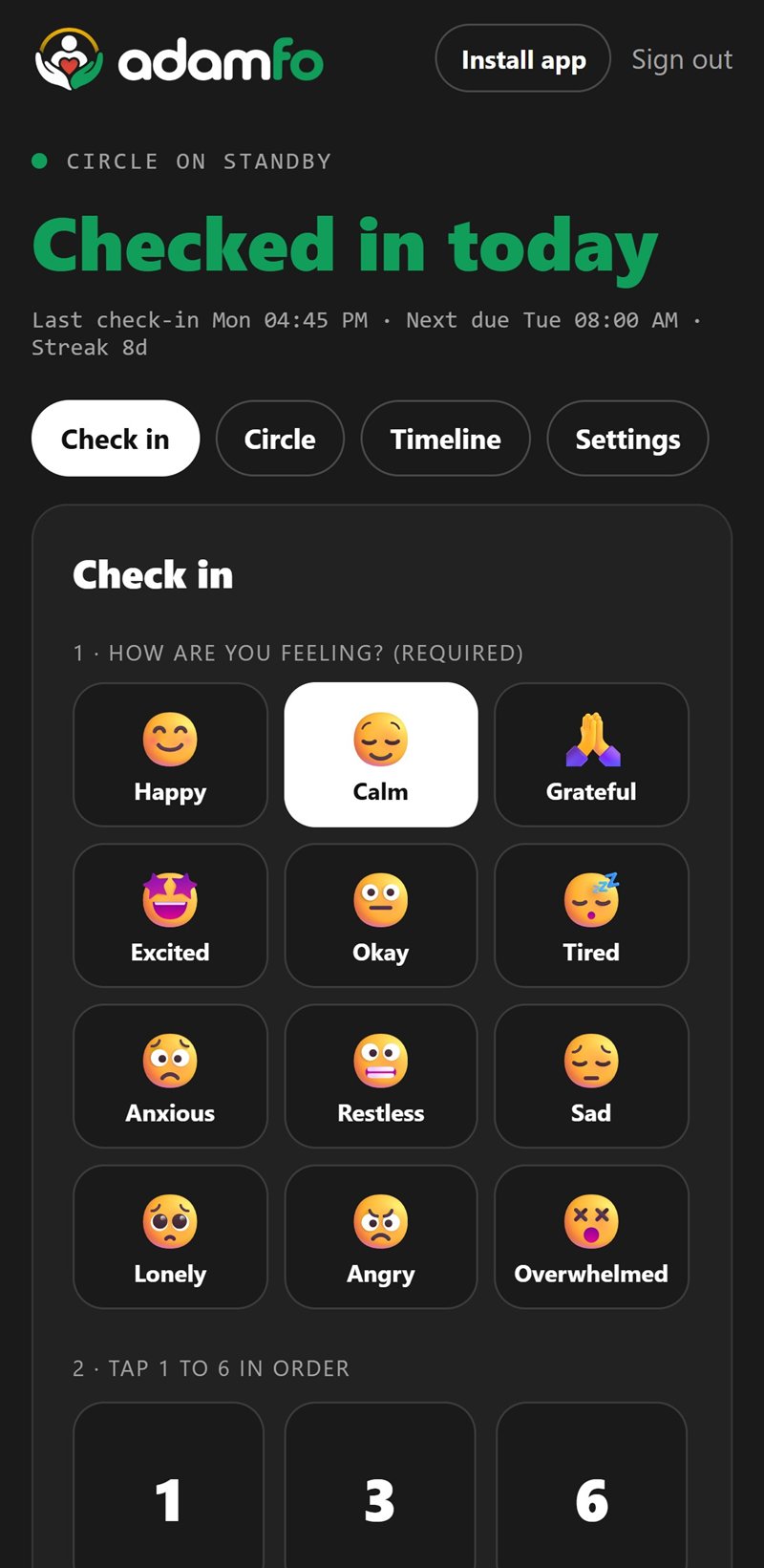
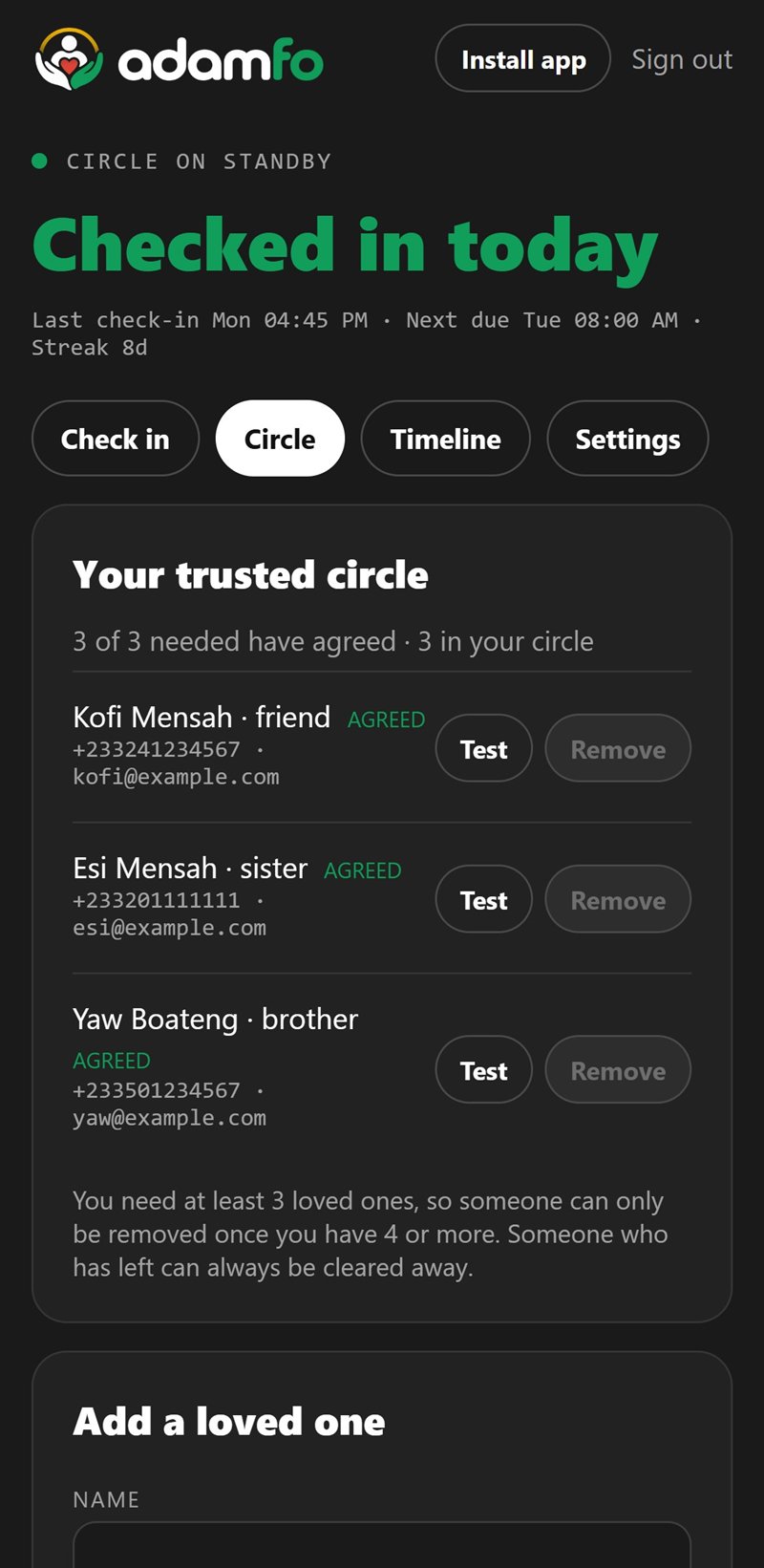
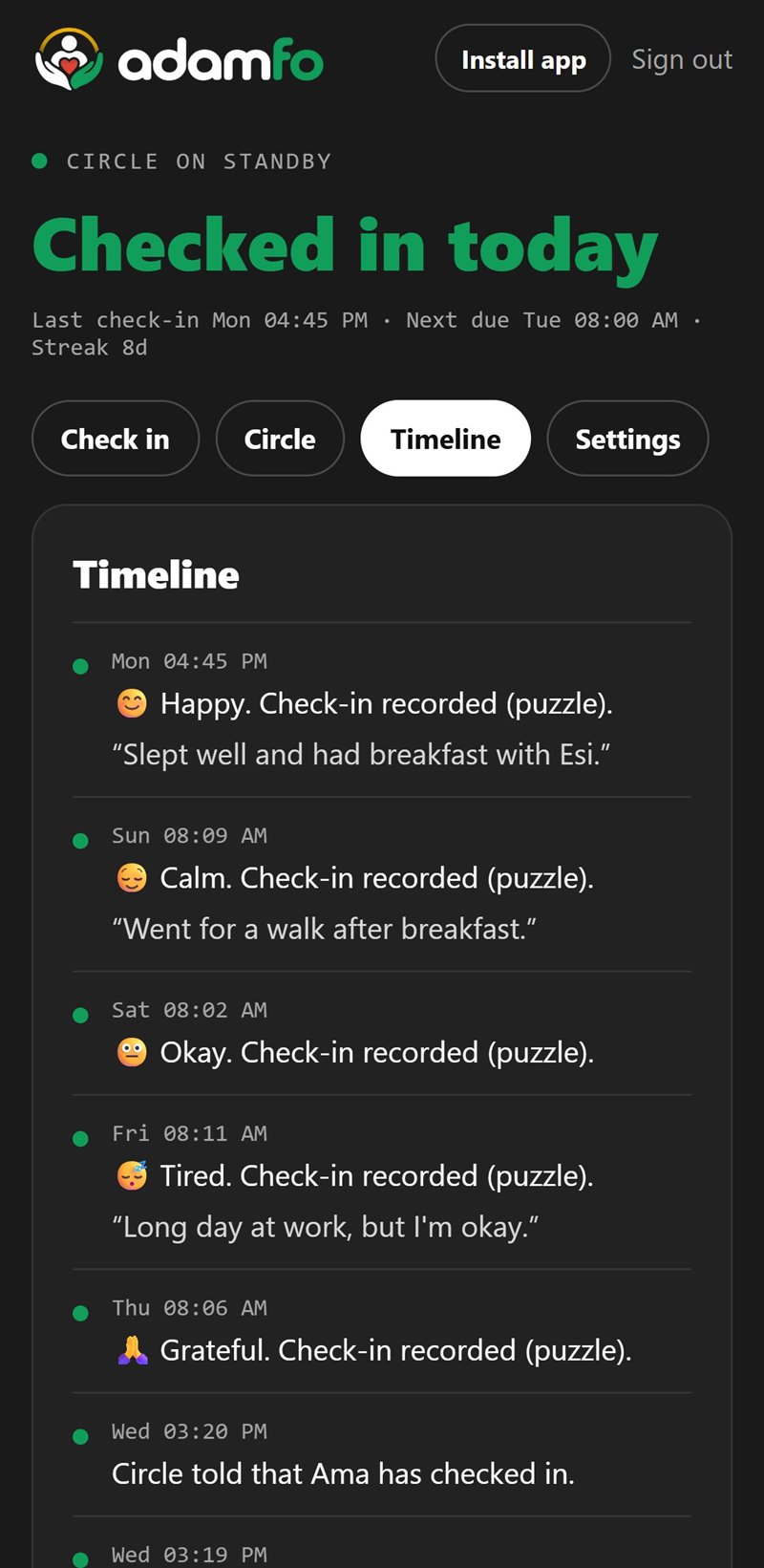
Free to join. Open it in your browser and install it like an app. You’ll be asked to share your location when you sign up.
What we hold ourselves to
The patient sets up Adamfo, picks their circle and chooses their schedule on their own terms. Trusted contacts must agree, with the PIN they were sent, before they can ever be alerted.
Location is required, because it’s what lets an alert help: it’s captured at each check-in and shared only in an alert, so your circle knows where to look. No continuous tracking, no live map.
Travel, hospital stays, a day off: check-ins can be paused in advance so an alert never goes out for nothing.
Adamfo is a safety net that connects people. It does not replace doctors, medication or emergency services.
Roadmap
Understanding relapse, isolation and the role of family and friends
Daily puzzles, progress notes and the one-tap “I’m doing well”
A consent-based circle of at least three loved ones, alerted by text and email with the last known location after a missed window
Optional, consented sharing of check-in history with a patient’s doctor
Adamfo is live. Create an account and set up your circle today
The same app in the app stores, with reminders on your phone
The team

Registered General Nurse in Kumasi, Ghana, focused on mental health and maternal mental health.
oliviaboakye.site →
Rehabilitation specialist turned accessibility engineer in Kumasi, Ghana, with a BSc in Disability & Rehabilitation Studies. She builds inclusive tools and leads community health outreach.
ellenboakye.online →Adamfo is live. If you’re a patient, a family member, a clinician or someone who wants to help, try it and tell us what would make it better.